MEGA SALE
MARCH's Treat:
Exclusive Savings Inside!
Springlearns Team
Jan 13, 2025
8 min read
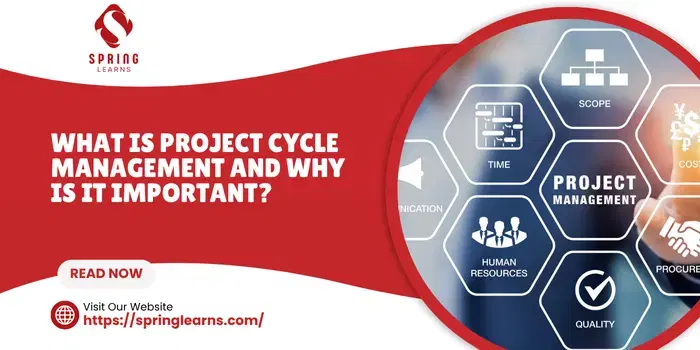
Project Cycle Management (PCM) means handling a project step by step, starting from the initial idea to the final finish. It helps to plan, do, and complete the project in a proper and organised way.
Project Cycle Management (PCM) means handling a project step by step, starting from the initial idea to the final finish. It helps to plan, do, and complete the project in a proper and organised way. It supports the team to stay on track, use time properly, and complete the project successfully without wasting money. The main aim of PCM is to deliver good-quality results, meet deadlines, and keep everyone involved happy.
PCM is a reliable method to handle and complete project work in a proper manner. It has been developed over the years and is used in many industries. It helps break down the project into simple steps, making it easy to manage and plan.
PCM offers several advantages that make projects easier to manage and more successful:
This article will explain how PCM works and how it can help improve your projects.
Project Cycle Management follows a structured system with different phases. Each phase is like a chapter in a book—you finish one before starting the next. This makes it easier to focus on goals and maintain quality throughout the project.
PCM uses key principles of project management like clear planning, risk awareness, teamwork, and transparency. It helps teams move step by step, with proper guidance at every stage. This improves the chances of completing the project successfully and on time.
Large projects can feel confusing and hard to manage, especially when different people, deadlines, and risks are involved. Project Cycle Management training provides a proven system that simplifies everything and gives a clear path to follow.
There are three main reasons to use PCM:
"Simplify, simplify, simplify." – Henry David Thoreau
Projects often have many moving parts. PCM breaks them into small, manageable phases. This makes the project easier to understand and handle, even when it's complex.
If we don't know how to control our time, then we cannot control anything in life. – Peter Drucker
When the steps are easy to follow, the team can do their work more smoothly. Productivity increases because everyone knows what to do. This saves time and reduces stress. When people feel in control, they do their best work.
"Transparency is the key ingredient for the successful running of any group." – Vijay Krishn.
Clear communication is important in any project. PCM defines every phase clearly. This helps project leaders share progress with the team, stakeholders, and clients. Transparency builds trust and helps meet expectations.
The Project Cycle Management Course is divided into five main phases. These phases help guide the team from the start of the project to its successful end.
Every project begins with an idea. In this step, the team talks about the main idea, what they want to achieve, and why the project is important. Managers identify what is needed to complete the project and check if it's practical and worth doing.
Planning is where the real groundwork happens. Teams prepare a roadmap for the project. They identify possible risks, resources needed, timelines, and roles. A strong plan means fewer surprises later on.
This is where the action happens. The team starts working based on the plan. Tasks are done, progress is tracked, and deliverables are produced. At this point, working together nicely and sharing ideas is very important.
When the project is going ahead, it should be checked properly from time to time. Managers check if the work is going as per the plan. If any problem or delay comes up, quick action is taken to fix it.
After all the tasks are completed, the project comes to an end. This stage includes reviewing the results, checking if goals were achieved, handing over deliverables, and learning lessons for future projects.
KPI stands for Key Performance Indicators. These are numbers that show how well the project is going.
Common KPIs include:
KPIs help identify success and problem areas during project execution.
Documentation is an essential part of PCM. It includes:
Proper documentation ensures transparency, learning, and smooth handover in future projects.
A Project Manager plays a key role in every stage of the project cycle. They:
Through a good Project Cycle Management Course or Project Cycle Management Training, project managers can sharpen these skills and lead projects to success.
Project Cycle Management is a practical and effective way to handle projects. It gives a clear structure, saves time and cost, and increases the chances of project success. PCM is especially helpful when managing big or complicated projects because it helps break them down into easy, manageable parts.
Springlearns is a top company that gives training in digital economy skills. We help people grow in their jobs and learn new things with fresh ideas. Now, you can join our PMP Certification Training, which will help you get ready for the PMP exam. Using useful approaches like PCM, you can improve your career and reach new success.
What is the main purpose of PCM?
The main purpose of PCM is to manage projects in a structured way to deliver quality results on time and within budget.
Is PCM only for big projects?
No, PCM works well for both small and large projects. It helps bring order and clarity to any size of project.
Who uses PCM?
Project managers, team leaders, and professionals across industries use PCM to manage their work more efficiently.
What makes PCM different from regular project management?
PCM follows a fixed cycle with defined phases. This ensures better planning, monitoring, and control throughout the project.
Can PCM reduce project risks?
Yes, one of the key goals of PCM is to identify and reduce risks early through better planning and monitoring.
Request More Details

Trustpilot

TrustScore 4.9
2,258 reviews
★★★★★
4.9/5
182 reviews
Trustpilot
TrustScore 4.9
2,258 reviews★★★★★
4.9/5
182 reviews






Disclaimer: Certified ScrumMaster (CSM®), Advanced Certified ScrumMaster (A-CSM®), Certified Scrum Professional – ScrumMaster (CSP-SM®), Certified Scrum Product Owner (CSPO®), Advanced Certified Scrum Product Owner (A-CSPO®), Certified Scrum Professional – Product Owner (CSP-PO®), Certified Scrum Developer (CSD®), Certified Scrum Professional (CSP®), Certified Agile Leadership (CAL-I®, CAL-II®), Scrum Education Units (SEU®), Certified Scrum Trainer (CST®), Certified Enterprise Coach (CEC®), and Certified Team Coach (CTC®) are registered trademarks of Scrum Alliance®.
© 2018-2024, Springlearns Solutions Private Limited. All Rights Reserved.